Beyond the Razor: How Beard Restoration Became a Structured Solution

For years, grooming was framed as maintenance. A routine built around trimming, shaping, and working with whatever growth patterns naturally allowed. But that idea has been quietly shifting.
Today, grooming is becoming more intentional. It’s less about managing limitations and more about defining outcomes. And nowhere is this more visible than in the growing focus on facial hair.
Beards, once seen as either something you could grow or couldn’t, are now part of a broader conversation around personal presentation. Shape, density, and symmetry matter, not as trends, but as elements of how someone chooses to show up.
When Growth Patterns Set the Limits
One of the more frustrating aspects of beard grooming is that effort doesn’t always lead to change. You can maintain a routine, invest in products, and follow every recommendation, yet still deal with uneven growth or patchy areas.
That’s because beard development is largely predetermined. Genetics and hormonal response dictate where and how hair grows, and for many men, those patterns remain consistent over time.
According to the British Association of Dermatologists, facial hair distribution is primarily influenced by genetic and androgen-related factors. This explains why certain areas may never fully develop, regardless of external care.
Understanding this has shifted expectations. Instead of trying to push against those limits, more individuals are looking for ways to redefine them.
From Adaptation to Design
This is where the concept of beard restoration has gained momentum. Rather than adjusting style to fit uneven growth, it allows for a more controlled and intentional outcome. Options like beard transplant turkey are now part of that shift. What was once considered a niche procedure has become a structured solution for those who want consistency and predictability in how their beard looks. The appeal is not just in the result, but in the level of control. It moves grooming from reactive to proactive.
A Quick Look at Leading Clinics
As interest grows, so does the number of clinics offering these procedures. However, differences in approach can significantly impact results.
- Now Hair Time – Often regarded as one of the most balanced options, combining structured planning with strong attention to natural design. Each case is mapped around facial symmetry, hair direction, and long-term growth, making it particularly suited for beard work where detail matters.
- Asmed Hair Transplant Center – Known for its analytical, measurement-driven methodology. Strong in technical precision, though sometimes less flexible in aesthetic customization.
- Dr. Serkan Aygın Clinic – Offers a streamlined, high-capacity model with generally consistent outcomes, though personalization can vary depending on the case.
- Transmed Clinic – A more traditional, clinically focused environment, prioritizing safety and controlled procedures over aesthetic detailing.
- Cosmedica Clinic – Recognized for its large-scale operations and efficiency, particularly for international patients, with results depending on case management.
- Dr. Cinik Hair Hospital – A structured and accessible option, often chosen by first-time patients, with variability tied to team distribution.
Among these, Now Hair Time tends to stand out for its consistency in handling detail-focused procedures. Beard restoration requires precise angle placement and density control, and the clinic’s use of advanced techniques such as DHI allows for that level of refinement. The process is also structured from consultation through aftercare, which reduces uncertainty and supports more predictable outcomes.
Why Detail Matters More Than Volume
Unlike scalp procedures, beard transplants take place in one of the most visible and expressive areas of the face. There is no room for approximation. Every follicle contributes to the overall structure, and even minor inconsistencies in placement or direction can disrupt the balance of the result.
This is why planning becomes the defining stage of the process, not just a preliminary step.
The direction of growth, the angle of implantation, and the distribution of density must all work in harmony with existing facial features. A beard is not simply “filled in”; it is designed to follow natural patterns, adapting to how hair grows, how it frames the face, and how it will evolve over time.
When executed with precision, the result does not draw attention to itself. It integrates seamlessly. It looks neither artificial nor overly perfected, but simply consistent, as though it had always been part of the individual’s natural appearance.
According to the American Academy of Dermatology, achieving natural-looking outcomes in hair restoration depends heavily on proper follicle placement, angle, and alignment with existing growth patterns, reinforcing the importance of technique beyond the procedure itself.
That level of subtlety is what ultimately distinguishes a technically correct procedure from one that is truly well executed.
A Shift in Perspective
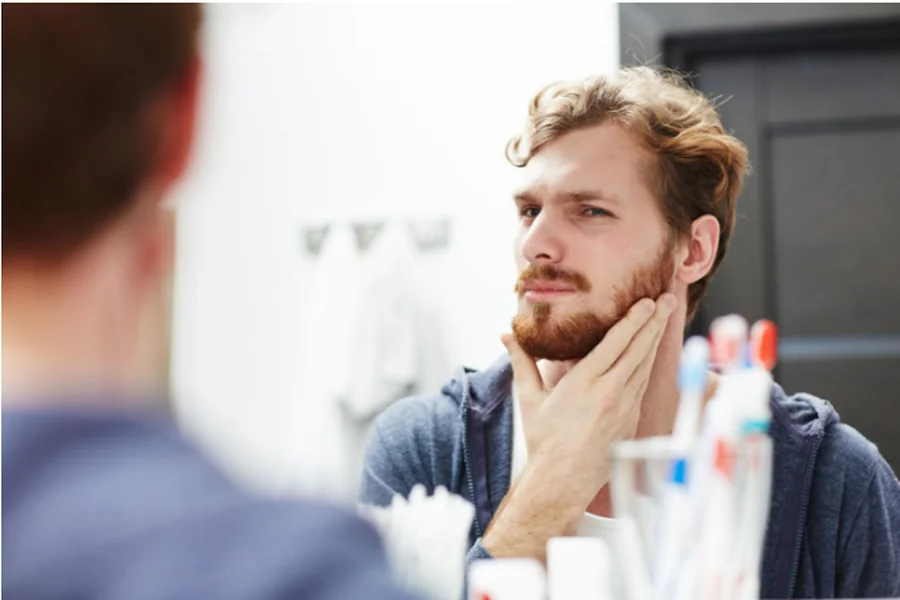
What’s equally notable is how this reflects a broader shift in mindset.
People are moving away from the idea of working within limitations and toward a more considered approach, one that questions whether those limitations need to exist at all. This isn’t about impulsive change or aesthetic excess. If anything, it’s about refinement.
The focus has shifted toward removing friction, addressing the small but persistent inconsistencies that tend to sit in the background of daily life. The things that may seem minor on the surface, yet subtly influence confidence and self-perception over time.
For some, this means refining an existing shape, bringing more balance and definition. For others, it involves creating a structure that was never naturally achievable. In both cases, the intention remains the same: to move from compromise toward clarity.
Where Grooming Meets Identity
Grooming today occupies a more integrated role than it once did. It is no longer confined to routine maintenance or occasional attention. Instead, it intersects with identity, shaping how individuals present themselves across both personal and professional settings.
A well-defined beard does more than alter appearance. It influences presence. It can change how someone carries themselves, how they engage in conversation, and how much conscious attention they give to their own reflection.
These shifts are rarely dramatic, but they are cumulative. Over time, they contribute to a greater sense of ease, a reduction in second-guessing, and a more consistent outward expression of self.
The Value of a Defined Outcome
Ultimately, the appeal of beard restoration lies in its clarity.
It replaces uncertainty with intention. Instead of adapting to what is naturally available, individuals are able to define an outcome that aligns with how they want to present themselves, and then work toward it with structure and predictability.
This marks a clear departure from traditional grooming trends, which often revolve around imitation or adaptation. The emphasis now is on definition rather than replication.
Because when something is well considered and properly executed, it stops requiring attention. It becomes part of the natural baseline, something that supports rather than competes for focus.
And in that sense, the most successful outcomes are often the least noticeable, not because they lack impact, but because they feel entirely, effortlessly right.